
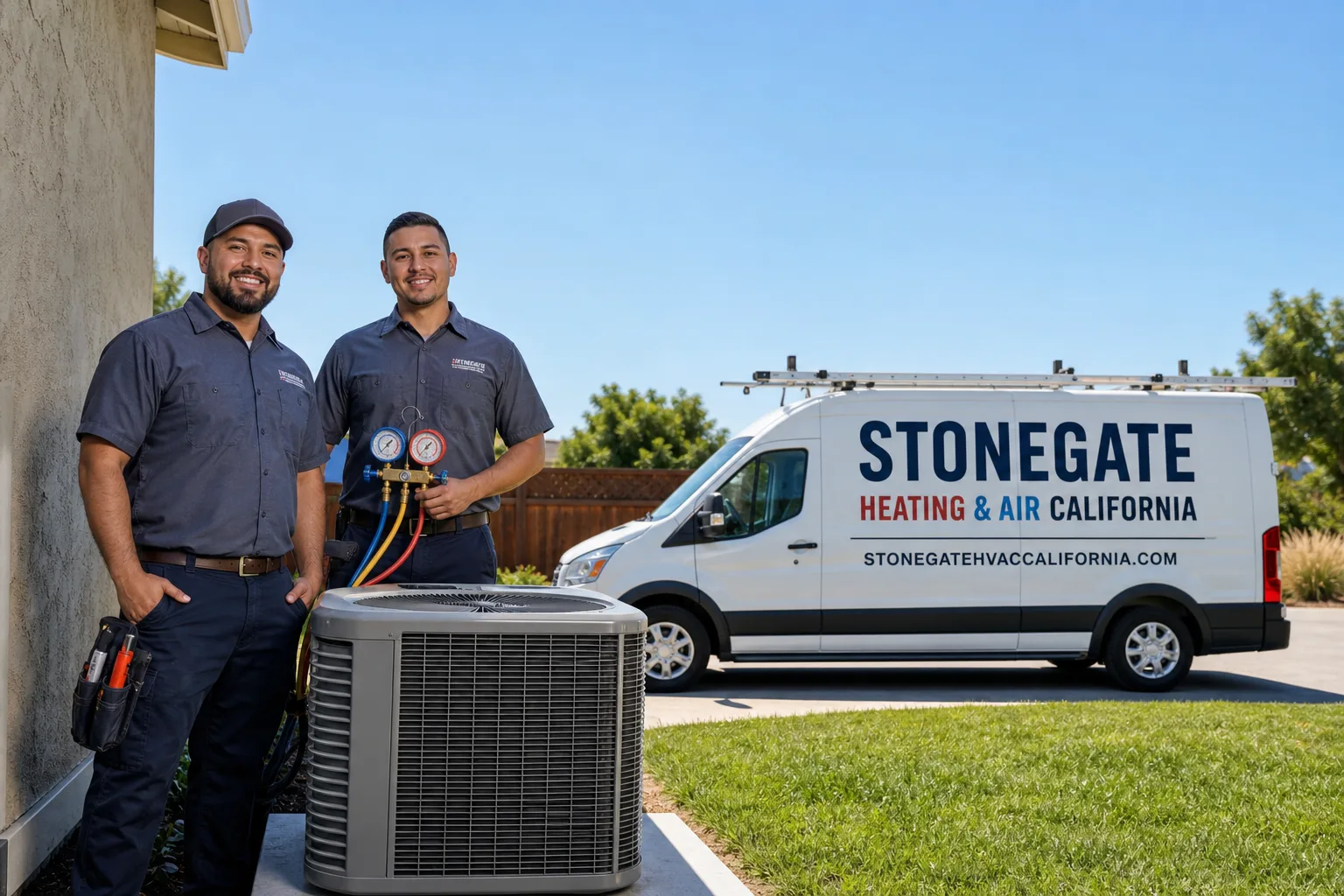
Fast, Reliable Heating & Furnace Across Crestline
Heating repair in Crestline runs $150–$700 for most furnace issues, and a full replacement typically starts around $3,500. Because Crestline sits at 4,500 feet with no natural gas mains, every propane system here needs altitude-specific orifices and regulator adjustments that flatland technicians simply don’t encounter. Our Heating & Furnace team makes the climb from Sacramento regularly, and we know the difference between a San Bernardino-spec valve and what your Crestline cabin actually needs. Call (855) 467-1888 for a free estimate.
Why Stonegate Heating & Air California Is Crestline’s Preferred Heating & Furnace Company
We’ve spent 16 years building a 4.7-star reputation across 499 verified reviews by showing up where we’re needed and fixing what others misdiagnose. Crestline isn’t a zip code we serve reluctantly — it’s a mountain market we’ve learned the hard way, one frozen regulator and corroded heat exchanger at a time.
Owner Jason Trent serves as Field Supervisor, not a desk-bound owner. That means he’s on job sites, including Crestline calls, checking combustion analysis and regulator pressure himself. When you’re heating a 1950s A-frame at 4,500 feet with propane, that hands-on accountability matters.
Our review volume reflects real jobs, not cherry-picked favorites. Customers in mountain communities like Crestline specifically mention that we don’t treat altitude as an afterthought. We’ve earned those notes by carrying the right orifice kits and knowing that a furnace spec’d for San Bernardino loses roughly 12% of its rated output up here.
Response time to Crestline varies by season and road conditions, but we prioritize heating emergencies — especially vacant-cabin freeze-ups and propane-out calls — because we understand that a weekend retreat can drop below freezing fast when the pilot goes out.
Our Heating & Furnace Services in Crestline
Furnace Repair
Most Crestline furnace repairs fall between $150–$700, with propane-specific issues like frozen regulators, failed thermocouples, and altitude-deration problems dominating our winter call volume. We pulled an old wall furnace from a 1950s cabin on Lake Drive that had been running a mismatched San Bernardino gas valve for years. The thermocouple was shot, propane regulator frozen, and we retrofitted a sealed-combustion unit with proper high-altitude jets and freeze-proof venting. That kind of inherited mismatch is common in Crestline’s converted vacation stock.

Furnace Replacement
Replacing a furnace in Crestline means sizing for altitude loss and specifying propane from the start. A unit rated for 80,000 BTU at sea level delivers roughly 70,000 BTU here — so we spec accordingly, or you freeze in January. Many Crestline cabins were never built for central forced-air, so we assess whether your A-frame can accommodate ductwork or whether a modern wall furnace or mini-split system makes more sense. We install Carrier, Trane, Lennox, and Goodman systems with factory propane conversion kits, not field-adapted guesswork.

Furnace Tune-Up
A Crestline tune-up runs $80–$200 and pays for itself fast. We check propane pressure at the manifold, combustion analysis for proper CO levels, and venting integrity against snow load and freeze-thaw cycles. Outdoor condensers and vents need elevation and protection here that valley HVAC simply doesn’t require. For vacation homes, we also verify that low-temperature safety switches are functional — because a failed switch on an unoccupied cabin can mean burst copper and a five-figure water damage claim.

Heat Exchanger Inspection & Replacement
Crestline’s legacy wall furnaces and early forced-air retrofits often run heat exchangers far past safe service life. Decades of propane combustion in unsealed A-frame construction accelerates corrosion and cracking. A compromised heat exchanger is a genuine safety hazard — carbon monoxide risk in tight mountain construction is not theoretical. We inspect with visual scopes and combustion analysis, and we replace with sealed-combustion units that draw outside air and vent directly, solving both the corrosion problem and the CO risk.

What happens when you call
- 1
A real person answersNo phone trees — you reach a local pro.
- 2
You get an upfront price rangeHonest numbers before anyone is dispatched.
- 3
A background-checked tech heads outLicensed & insured, dispatched right away.
- 4
You approve before work beginsNothing starts until you say go.
Trusted Brands We Service in Crestline
We carry factory training and hands-on experience across nine major brands: Carrier, Trane, Lennox, Goodman, Rheem, York, Daikin, Bryant, and American Standard. For Crestline customers, that means no “we don’t service that brand” dead end when your propane-converted Carrier or Trane needs a specific high-altitude orifice or a replacement gas valve. We stock common propane conversion components and can source brand-specific parts fast — critical when your cabin’s only heat source quits during a January cold snap and you’re looking at frozen pipes by morning.
Common Heating & Furnace Problems We See in Crestline Homes
- Propane system freeze-ups during prolonged sub-freezing spells. Vacation cabins unoccupied for weeks are especially vulnerable. The propane regulator can ice over, the thermocouple fails undetected, and by the time anyone arrives, the interior temperature has crashed below freezing. We install low-temperature alarms and recommend remote monitoring for absentee owners.
- Altitude-undersized furnaces originally installed for lower-elevation natural gas. A furnace moved up from San Bernardino or Redlands loses 4% of rated BTU output per 1,000 feet above 2,000 feet. At Crestline’s 4,500 feet, that’s roughly 12% capacity gone — enough to leave you cold on the coldest nights. We see this constantly in retrofitted cabins where a previous owner installed hand-me-down equipment.
- Corroded heat exchangers from decades of wall-furnace operation in unsealed A-frame construction. The original 1950s–1970s cabins drew combustion air from inside the living space, and moisture from cooking, breathing, and snow-tracked-in boots accelerated rust. Modern sealed-combustion units solve this, but the retrofit requires proper venting through snow-load roofing.
- Short-cycling from improper propane pressure or oversizing. A furnace that can’t complete a heating cycle wastes propane, wears components prematurely, and never achieves comfortable temperatures. At altitude, the margin for error on gas pressure and orifice size is thinner — 10 inches water column at sea level behaves differently at 4,500 feet.
Pricing for Heating & Furnace in Crestline, CA
| Service | Typical Range in Crestline |
|---|---|
| Furnace Repair | $150–$700 |
| Furnace Tune-Up | $80–$200 |
| Furnace Replacement (installed) | $3,500–$7,500 |
What moves a repair toward the higher end? Propane regulator replacement, heat exchanger work, and altitude-specific component swaps that flatland trucks don’t carry. Replacement pricing varies with whether your cabin needs ductwork fabricated for non-standard framing, or whether we’re fitting a modern wall furnace into existing openings. We don’t quote over the phone for replacements — every Crestline job has enough variables that a site visit saves everyone from surprises. Estimates are free. Call (855) 467-1888 to schedule.
We Also Serve Cities Near Crestline
Our mountain service area extends to Lake Arrowhead, Muscoy, San Bernardino, and Highland. Lake Arrowhead shares Crestline’s altitude challenges; Muscoy and San Bernardino sit low enough that natural gas dominates and propane expertise is rarer than you’d expect. Highland splits the difference. Wherever you are, Jason Trent supervises the job personally.
Serving Crestline, CA — Our Local Coverage Area
We’re based in the Crestline area and know this community well. Use the map below to see our service coverage — if you’re nearby, we can almost certainly help.
FAQs — Heating & Furnace in Crestline
Yes. Propane orifices are smaller than natural gas orifices, and Crestline’s 4,500-foot elevation requires additional deration — typically a smaller orifice still, plus adjusted regulator pressure. A San Bernardino-spec furnace converted to propane without altitude correction will run rich, soot up, and potentially overheat. We’ve corrected this exact mistake on cabins throughout the 92325 zip. Call (855) 467-1888 and we’ll check your setup.
Install a low-temperature alarm with remote notification, maintain adequate propane supply with automatic delivery, and schedule a pre-departure tune-up to verify safety switch function. We also recommend draining plumbing if you’ll be gone more than two weeks during sub-freezing weather — HVAC can’t save you if the propane runs out while you’re away. We offer winterization checks specific to Crestline’s vacation-home market.
Sometimes, but often not practically. A-frame construction lacks the inter-floor cavities and basement space that make ductwork straightforward. We’ve successfully installed mini-split heat pumps and high-efficiency wall furnaces as alternatives that deliver modern comfort without gutting the structure. Jason Trent assesses each cabin individually — he’s walked too many Lake Drive crawlspaces to recommend ductwork where it’ll fight the roofline.
Short-cycling at altitude usually means improper fuel-air mixture, incorrect orifice size, or a furnace oversized for the derated output it’s actually delivering. The unit heats too fast, satisfies the thermostat, shuts off, and restarts — wearing components and wasting fuel. Combustion analysis and orifice verification fix most cases. This is a Crestline-specific diagnosis that valley HVAC techs rarely encounter.
Yes. We’re factory-trained and field-experienced on both brands, including their propane conversion protocols and high-altitude deration procedures. We stock common Carrier and Trane gas valves, ignitors, and control boards, and we know which OEM parts cross-reference for mountain service. Call (855) 467-1888 for same-week availability — we don’t make Crestline customers wait for a San Bernardino parts run.
Written by Jason Trent, Owner and Field Supervisor at Stonegate Heating & Air California, serving Crestline and the San Bernardino Mountains since 2008.