
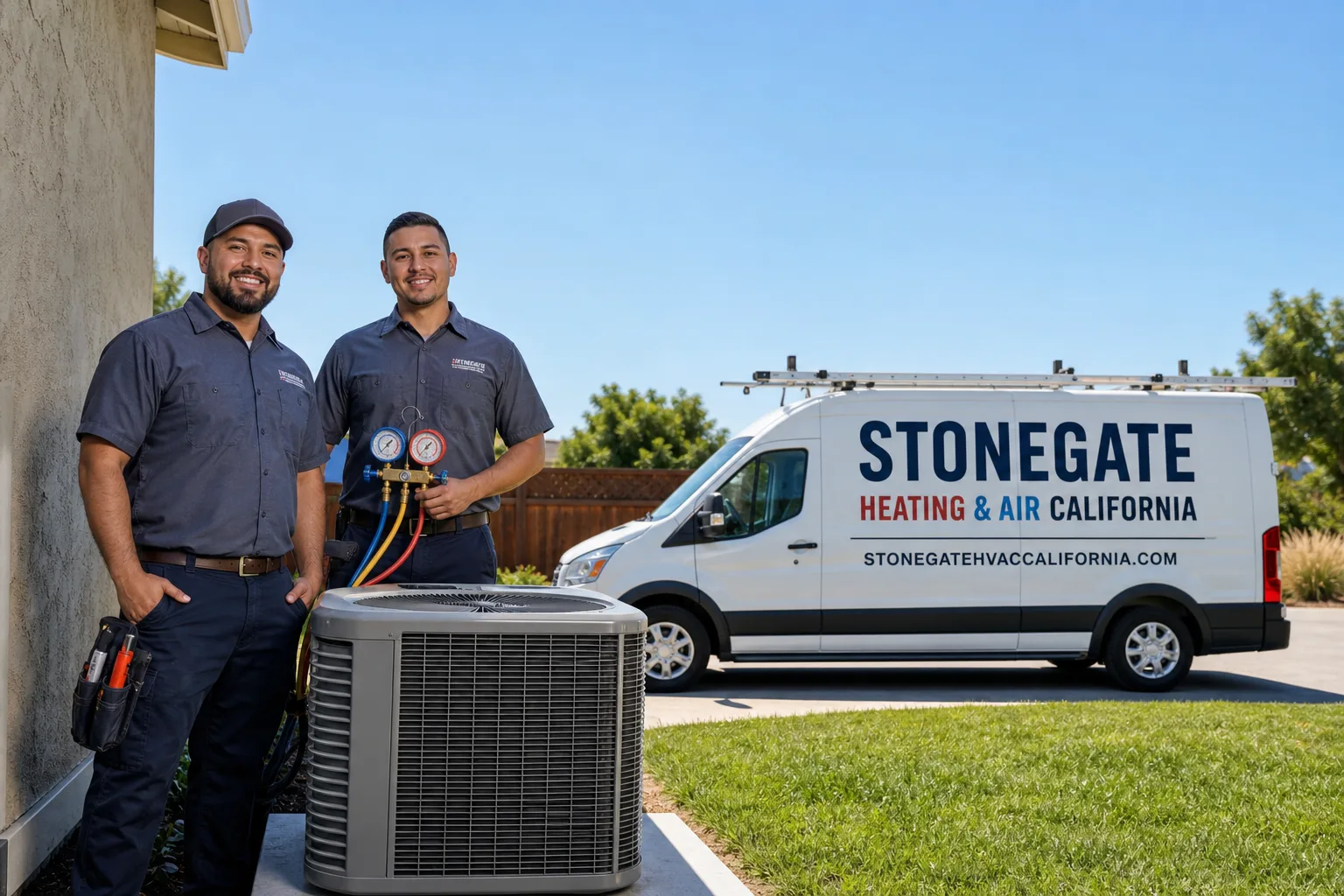
Fast, Reliable Heating & Furnace Across San Marino
Furnace repair in San Marino typically runs $150–$700, while full replacement for the city’s legacy estate homes ranges from $3,500–$7,500. Most calls in the 91108 and 91118 ZIP codes reach us within the same day, and we carry parts for Carrier, Bryant, and American Standard systems to avoid the multi-day waits that leave these older homes cold.
We’ve been driving out to San Marino since 2009. Jason Trent, our owner and Field Supervisor, knows the difference between a standard furnace swap and what this city actually demands. San Marino’s 1920s–1950s Spanish Colonial Revival, Tudor, and Mediterranean estates weren’t built for forced-air HVAC. Plaster-and-lath walls, no original duct chases, enormous room volumes, and some of the strictest appearance codes in Southern California mean nearly every job here is a bespoke retrofit. We’ve routed combustion air through crawlspaces, hidden vent terminations behind decorative grilles, and replaced 1940s floor furnaces buried under custom tile hearths. If your home is on Virginia Road, Canterbury Road, or any of the tree-lined streets between them, we’ve likely already solved the exact problem you’re facing.
Call (855) 467-1888 for a free estimate. Jason supervises every project personally.
Why Stonegate Heating & Air California Is San Marino’s Preferred Heating & Furnace Company
San Marino homeowners research before they call, and they should. Our 499 verified reviews at a 4.7-star average span 16 years of California HVAC work, including dozens of jobs specifically in the 91108 ZIP code. That’s not a handful of cherry-picked testimonials. It’s a volume that reflects repeatable results across hundreds of real jobs, many in legacy homes where standard solutions simply don’t apply.
Jason Trent doesn’t manage from a back office. He holds the title of Field Supervisor and is physically present on job sites. When we work on a Canterbury Road estate or a Virginia Road Spanish Colonial, Jason is there inspecting duct routing, checking combustion air paths, and making sure the finished installation meets San Marino’s exacting permit standards. Owner on the job isn’t a slogan here. It’s how we operate.
Our technicians are experienced with nine leading HVAC brands: Carrier, Trane, Lennox, Goodman, Rheem, York, Daikin, Bryant, and American Standard. Whatever system is currently heating your San Marino home, we’ve serviced it before. From a single-room mini split to a full commercial system, one team handles it all.
We’re familiar with San Marino’s specific climate demands too. Summer highs of 98–108°F on the San Gabriel Valley floor, those fall Santa Ana wind events pushing hot, dry air from the northeast, and the temperature swings that come with hilly lots near the San Gabriel Mountains. Coastal HVAC sizing models don’t work here. We size for reality.
Our Heating & Furnace Services in San Marino
Furnace Repair
A no-heat call in San Marino rarely means a simple ignitor swap. We answered one on Canterbury Road where a 1948 floor furnace—buried under a custom tile hearth—had failed. The homeowner didn’t realize the unit was original. We routed a new direct-vent furnace through the existing chase, sealed the roof penetration per San Marino’s aesthetic code, and matched the grille to the 90-year-old Spanish tile. Took two days but saved the look of the living room. Most repairs in San Marino run $150–$700, though legacy access issues can push toward the higher end.

Furnace Replacement
This is our most called-for service in San Marino, and for good reason. Original gravity or floor furnaces from pre-1950 construction are still in service across the city. When the heat exchanger cracks, the entire unit must be replaced with a sealed-combustion system to meet current code—no repair is possible. Plaster-and-lath walls and no duct chases mean routing combustion air often requires tunneling through crawlspaces and closets, adding 40–60% to labor time versus a standard frame home. Replacement runs $3,500–$7,500 depending on zoning needs and concealed routing requirements.

Furnace Tune-Up
San Marino’s fall Santa Ana wind season creates a second peak-demand period that coastal models miss. A pre-season tune-up at $80–$200 catches cracked heat exchangers, failing gas valves, and back-draft risks before the winds hit. We inspect vent terminations especially carefully here. Santa Ana events can back-draft a poorly vented legacy furnace, pulling carbon monoxide into living spaces. San Marino’s hilly lots and attached garages make side-wall venting difficult without violating setback rules, so we verify every combustion path.

Heat Exchanger Inspection & Replacement
In San Marino’s original floor furnaces and early forced-air conversions, heat exchanger failure is often the terminal diagnosis. These units weren’t designed for modern cycling patterns, and decades of thermal stress create cracks that leak combustion gases into conditioned air. We use combustion analyzers and borescope inspection to confirm failure without unnecessary teardown. When replacement is needed, we design a sealed-combustion solution that routes through existing chases or concealed attic paths to satisfy San Marino’s strict appearance codes.

Gas Valve Repair
Legacy gas valves in San Marino’s pre-1960 furnaces often suffer from diaphragm deterioration and pilot safety failures. We stock modern replacement valves compatible with original manifold configurations, avoiding the “that part’s obsolete” dead end. Every gas valve repair includes combustion analysis to verify proper firing rate and safe venting, critical in homes where vent routing already pushes code limits.

Ignitor Replacement
Hot surface ignitors in newer San Marino furnaces and pilot relight systems in legacy units both fail with age. We match replacement ignitors to the specific furnace model, test flame signal strength, and verify that San Marino’s occasional low gas pressure events during peak demand won’t cause future lockouts.

What happens when you call
- 1
A real person answersNo phone trees — you reach a local pro.
- 2
You get an upfront price rangeHonest numbers before anyone is dispatched.
- 3
A background-checked tech heads outLicensed & insured, dispatched right away.
- 4
You approve before work beginsNothing starts until you say go.
Trusted Brands We Service in San Marino
Our Heating & Furnace team works on nine major brands: Carrier, Trane, Lennox, Goodman, Rheem, York, Daikin, Bryant, and American Standard. For San Marino’s estate homes, we most commonly encounter Carrier and Bryant systems from 1980s–2000s retrofits, plus original American Standard gravity furnaces from the 1940s–50s. We stock common ignitors, gas valves, and control boards locally, and our relationship with Daikin and Bryant distributors means we can source specialized heat exchangers and zoned control components without the two-week delays that leave these large homes uncomfortable. Whatever brand you have, one team handles it. No “we don’t service that” conversations.
Common Heating & Furnace Problems We See in San Marino Homes
- Original floor furnaces failing in homes built 1920–1950. These gravity or early forced-air units are still operating in dozens of San Marino estates. When the heat exchanger cracks, replacement is mandatory—repair is prohibited by current code. We design sealed-combustion retrofits that preserve interior aesthetics.
- Multiple mismatched systems serving one property. Many large homes on Virginia Road and Canterbury Road have converted basements and detached guest structures added in the 1940s–60s, each on separate improvised systems. We routinely find three or four undersized units that need consolidation into one properly zoned load calculation.
- Back-drafting during Santa Ana wind events. Hot, dry northeast winds can reverse vent flow in poorly terminated legacy furnaces. San Marino’s strict setback rules and attached garages often prevent simple side-wall solutions, requiring creative roof or concealed chase routing.
- Combustion air routing through crawlspaces and closets. With no original duct chases and plaster-and-lath walls that resist modification, new furnace installations often require 40–60% more labor than standard frame homes. We’ve tunneled through foundations and converted linen closets to mechanical chases to meet code without visible exterior equipment.
Pricing for Heating & Furnace in San Marino, CA
San Marino’s legacy housing stock means most furnace work runs higher than standard San Gabriel Valley tract homes. The concealed routing, permit complexity, and custom fabrication required by the city’s appearance codes add real labor and material cost.
| Service | Typical Range in San Marino |
|---|---|
| Furnace Repair | $150–$700 |
| Furnace Replacement | $3,500–$7,500 |
| Furnace Tune-Up | $80–$200 |
What pushes replacement toward the higher end: multiple zones needed for 3,500–6,000+ sq ft layouts, concealed vent routing through attics or crawlspaces, custom grille or register fabrication to match period interiors, and permit drawings required by San Marino’s building department. What keeps repair costs down: catching problems during tune-up before cascade failure, and our stocked parts for Carrier, Bryant, and American Standard systems.
We don’t quote over the phone for San Marino jobs. The variables are too specific to each estate. We provide free in-home estimates, and Jason Trent personally evaluates access, routing, and code requirements before any work begins. Call (855) 467-1888 to schedule.
We Also Serve Cities Near San Marino
Our service radius covers the full San Gabriel Valley floor and foothill communities. We regularly work in San Gabriel, East San Gabriel, Alhambra, and East Pasadena, bringing the same owner-supervised approach to legacy homes and standard construction alike. The climate, housing stock, and permit environment vary block by block in this area, and our 16 years of regional experience means we adjust for each city’s specific requirements.
Serving San Marino, CA — Our Local Coverage Area
We’re based in the San Marino area and know this community well. Use the map below to see our service coverage — if you’re nearby, we can almost certainly help.
FAQs — Heating & Furnace in San Marino
You can’t repair it because a cracked heat exchanger in an unsealed combustion floor furnace violates current California health and safety code, and no replacement heat exchanger is manufactured for these units. San Marino’s original gravity and floor furnaces from the 1920s–1950s were designed for a different era of fuel costs and safety standards. When they fail, the entire system must be replaced with a sealed-combustion furnace that draws combustion air from outside and vents exhaust through approved terminations. We’ve retrofitted dozens of these in San Marino estates, routing through existing chases or concealed attic paths to preserve the original interior design. Call (855) 467-1888 and Jason Trent will evaluate your specific layout.
No, San Marino’s appearance and permit codes almost never allow visible exterior furnace vents on street-facing elevations. The city’s strict standards, rooted in its 1920s–1950s estate planning, tightly restrict visible equipment, roof penetrations, and condenser placement. We’ve developed specific solutions for this: routing combustion air and flue gases through crawlspaces, attics, and interior chases, then terminating at rear or side roof planes hidden from street view. This is standard practice for our San Marino work but would be illegal or impractical in most other SoCal cities that allow simpler side-wall venting. Every installation we do includes permit drawings showing concealed routing.
Santa Ana winds can back-draft a poorly vented furnace, pulling combustion gases including carbon monoxide into your living space. San Marino’s position on the San Gabriel Valley floor makes it especially vulnerable to these hot, dry northeast wind events that create a second peak-demand season each fall. The pressure differential between the vent termination and the wind stream can reverse normal draft flow. We test every San Marino installation with a manometer during Santa Ana conditions when possible, and we design vent terminations with wind-resistant caps and proper height above roof lines. If your furnace is original or pre-1980, this risk is significantly higher. Call (855) 467-1888 for a combustion safety check.
Yes, and we regularly do. Many large estate homes on leafy streets like Virginia Road and Canterbury Road have converted basements and detached guest structures added in the 1940s–60s, each served by a separate improvised system. We routinely discover three or four mismatched, undersized units that were never designed as a unified system. Consolidation requires a proper Manual J load calculation for the entire 3,000–6,000+ sq ft property, then designing a zoned system with dampers and multiple thermostats to handle the irregular, multi-wing floor plans common in San Marino. The result is better comfort, lower utility bills, and one maintenance relationship instead of four. Jason Trent evaluates these consolidations personally.
Yes, San Marino requires a building permit for all furnace replacements, and the permit process includes review of vent routing, combustion air sources, and exterior appearance impact. The city’s building department is thorough but reasonable if drawings are complete. We prepare permit packages as part of our replacement service, including load calculations, vent termination details, and confirmation that no visible equipment violates appearance standards. Most permits are approved within 5–10 business days. We don’t recommend skipping this step; unpermitted work in San Marino can trigger correction orders and complicate future home sales. Call (855) 467-1888 and we’ll handle the permit process from application to final inspection.
Written by Jason Trent, Owner and Field Supervisor at Stonegate Heating & Air California, serving San Marino and the San Gabriel Valley since 2009.