
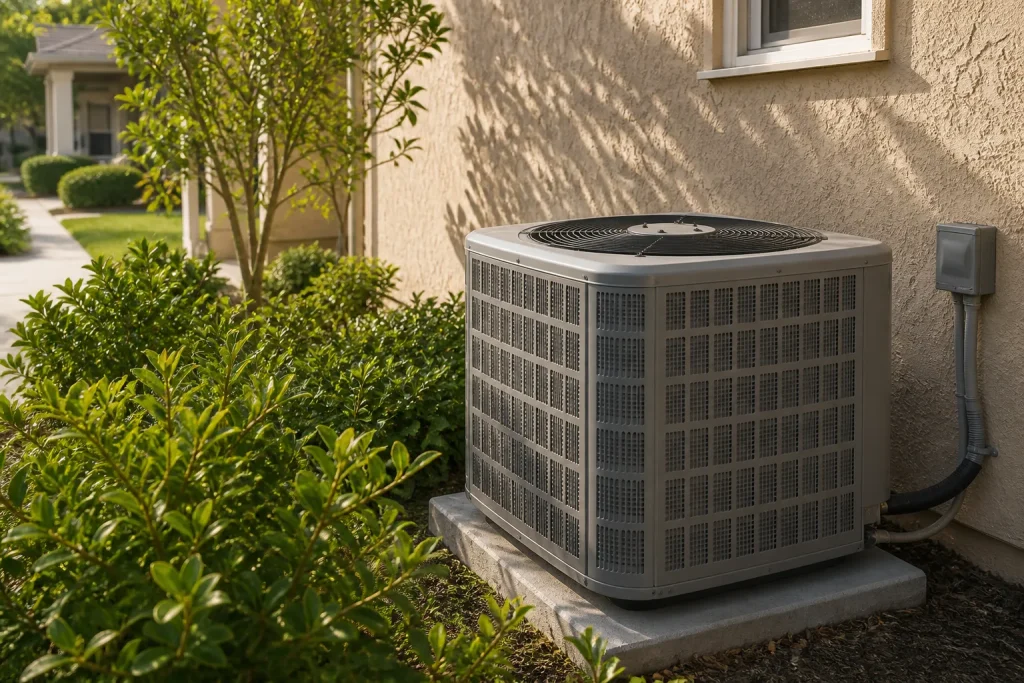
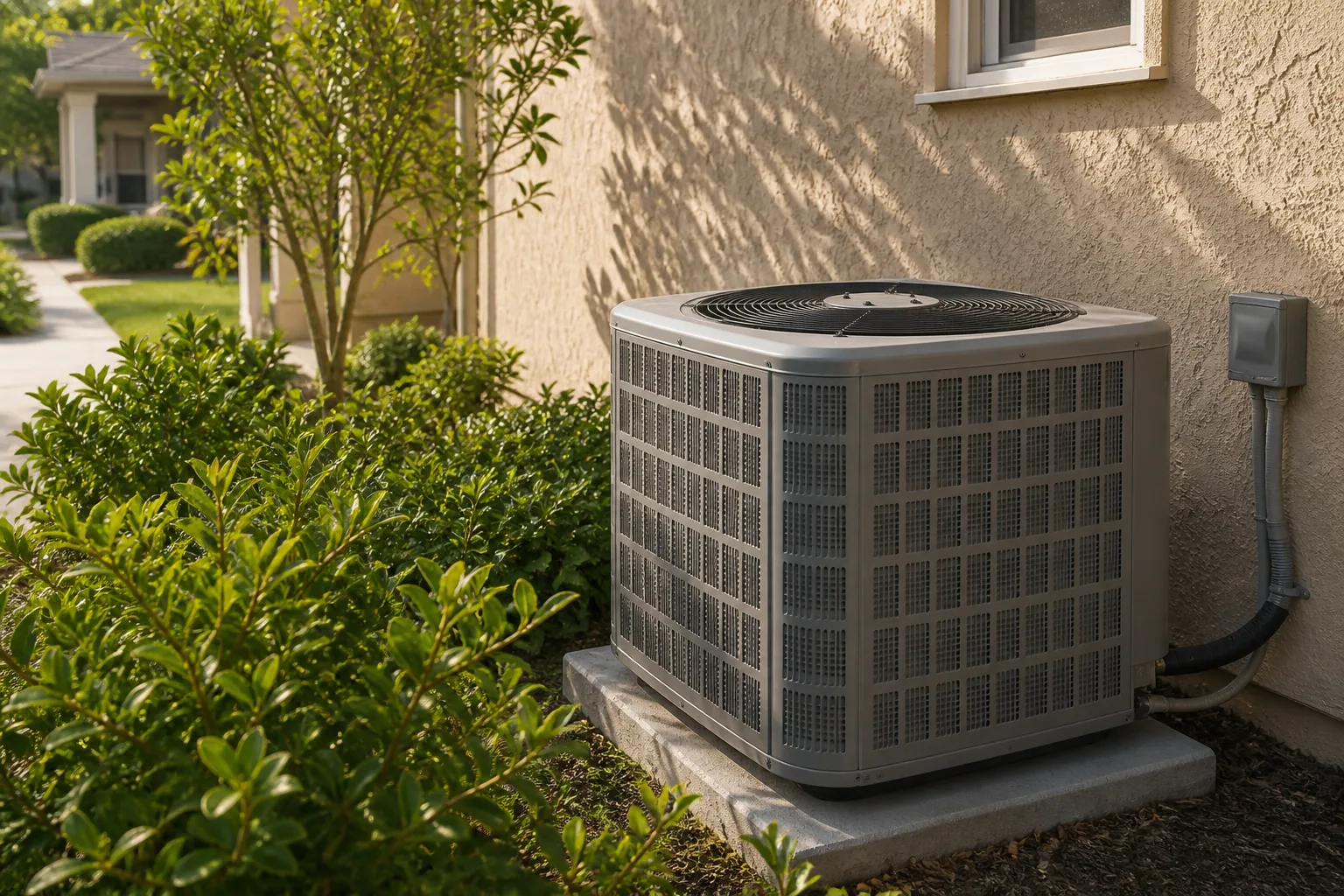
Rheem AC Repair & Installation in Sacramento: A Homeowner’s Guide
Rheem air conditioners are a solid mid-market choice for Sacramento homes, with repair costs typically running $200–$600 for common issues and full installations ranging $4,500–$8,500 depending on the tier and home size. The key is knowing which Rheem line fits our dry, hot-summer climate and avoiding the EcoNet control board misdiagnosis that costs homeowners thousands. If you’d rather have a technician who actually knows Rheem’s quirks look at your system, call Stonegate Heating & Air California at (855) 467-1888.
Here’s the mistake we see most often in Sacramento: a Rheem Prestige or Classic Plus unit throws a fault code, the homeowner calls a generic HVAC company, and the tech declares the compressor shot. Quote: $1,800–$2,400. Problem: it’s often just the EcoNet board locking out after a voltage spike, a $180–$320 part that takes 45 minutes to swap. We’ve rescued more than a few Natomas and Elk Grove homeowners from that exact scenario. Rheem isn’t exotic equipment, but it does have specific failure patterns in our Central Valley power grid that techs who bounce between nine brands without depth simply miss.
Which Rheem Tier Makes Sense for Sacramento’s Climate?
Rheem builds three residential lines: Classic, Classic Plus, and Prestige. The gap between them isn’t marketing fluff, but Sacramento’s dry, cooling-dominant climate means you can save money by matching the tier to actual local conditions rather than defaulting to the most expensive unit.
Classic Series (14–16 SEER, single-stage): The workhorse. Single-stage compressor, basic PSC or standard ECM blower. For a 1,200–1,800 square foot Sacramento ranch built in the 1970s–1990s with decent insulation, this is often plenty. Our summers hit 100°F+ for stretches, but humidity stays low. Single-stage units run hard when it’s hot and cycle off when it’s not. Simple, repairable, parts widely available. Installation typically runs $4,500–$5,800.
Classic Plus (16–17 SEER, two-stage): The sweet spot for most Sacramento homeowners we talk to. Two-stage compressor runs at 70% capacity most of the time, kicking to 100% only on peak days. That matters in March through May and October, when Sacramento days swing from 55°F mornings to 85°F afternoons. A single-stage unit cycles on and off constantly during those shoulder months. Two-stage runs longer, dehumidifies slightly better, and avoids the wear of short-cycling. Installation range: $5,800–$7,200.
Prestige (up to 20 SEER, variable-speed): Excellent equipment, but you’re paying for humidity control and ultra-fine staging that Sacramento doesn’t need. The inverter-driven compressor modulates in 1% increments, ideal for Houston or Miami. Here, the efficiency gain over Classic Plus is marginal on annual cooling costs. We install Prestige when a homeowner specifically wants the quietest operation possible or has solar offset and wants maximum SEER for net metering calculations. Otherwise, it’s overkill. Installation: $7,200–$8,500+.
Our recommendation for most Sacramento homes: Classic Plus. The two-stage compressor matches our climate pattern without the Prestige premium.
The EcoNet Problem Every Sacramento Rheem Owner Should Know
Rheem’s EcoNet control board is the brain of their newer Classic Plus and Prestige units. It communicates between thermostat, compressor, and variable-speed blower. It’s also the single most misdiagnosed component we encounter in the Sacramento area.
Here’s what happens: SMUD’s grid runs clean most of the year, but summer voltage fluctuations during peak load, or the brief sag when your neighbor’s pool pump kicks on, can trigger EcoNet’s protective lockout. The board doesn’t fail. It enters a soft lockout that clears with a specific reset sequence. But the fault code on the LED, read hastily, points to “compressor failure” or “high pressure lockout.” A tech who hasn’t worked deep on Rheem sees that code, tests the compressor amp draw (which reads normal, but they don’t trust it), and recommends replacement.
We had a call last month from a homeowner in Pocket-Greenhaven who’d been quoted $2,100 for a compressor replacement on a four-year-old Classic Plus. Jason Trent walked the job himself. Reset the EcoNet, verified capacitor load, checked refrigerant charge. Total bill: $195 service call. The compressor was fine.
EcoNet reset basics (safe checks only):
- Power down at the disconnect for 3–5 minutes, not 30 seconds. The board holds residual memory.
- Restore power and wait 10 minutes before calling for cooling. The board runs a self-diagnostic sequence.
- If the code repeats, note the exact flash pattern. Three flashes, pause, one flash means something different than three flashes steady.
When to call a pro: If the reset doesn’t hold, or if you see burnt terminals, swollen capacitors, or smell electrical heat. Those are not DIY territory. The EcoNet board itself runs $180–$320 plus labor. A misdiagnosed compressor replacement runs $1,500–$2,500. The math on getting it right matters.
Rheem Warranty Reality: Why ProPartner Status Matters
Rheem operates a ProPartner contractor network with tiered status based on training completion, installation volume, and customer satisfaction scores. Here’s what Sacramento homeowners miss: warranty coverage on parts, especially the 10-year compressor and parts warranties, can have gaps if your installer wasn’t ProPartner-certified at the time of installation.
Rheem’s warranty terms state that 10-year parts coverage requires “proper installation by a licensed HVAC contractor.” In practice, that means the installing company must register the unit within 60 days and meet Rheem’s installation standards. We’ve seen cases where a homeowner bought a “great deal” from a handyman or unregistered installer, the compressor failed at year six, and Rheem denied the claim due to improper registration or installation documentation.
Stonegate Heating & Air California maintains active certification across Rheem’s lineup. More importantly, we document every installation photographically, register warranties same-day, and keep records so a claim at year eight doesn’t become a fight. Our 16 years in business and nearly 500 reviews mean we’re still here when that warranty call comes, not vanished like the guy who offered $800 off for cash.
One practical note: Rheem’s base warranty is 5 years parts, 10 years if registered. Always register. The card is in your paperwork, or your contractor should do it. We’ve handled warranty claims for Sacramento homeowners who assumed their installer handled it. They didn’t. Don’t learn that lesson the hard way.
Sacramento Maintenance: What Rheem Units Actually Need Here
Every HVAC company says “get maintenance.” Here’s what Rheem units specifically need in Sacramento’s environment, based on what we’ve actually found failing during 16 years of service calls from Citrus Heights to Galt.
Coil coating inspection: Sacramento’s UV index is brutal June through September. Rheem’s aluminum coils hold up well, but the factory coating degrades over time. Once bare aluminum is exposed, the combination of UV, dust, and occasional agricultural drift from surrounding farmland accelerates corrosion. We inspect coil integrity during every tune-up and can apply protective coating before pitting starts. Caught early: $150–$250. Caught after leaks develop: $800–$1,400 for coil replacement.
Capacitor load testing annually: This isn’t a visual check. A capacitor can look fine and test at 60% of rated microfarads, which forces the compressor and fan motor to draw excess amperage. Sacramento’s heat and voltage fluctuation stress capacitors harder than coastal climates. We test under load, not just with a multimeter. A $35 capacitor replaced proactively saves a $1,200 compressor.
Drain pan algae treatment: Rheem’s horizontal drain pans in attic installations are particularly prone to biofilm buildup in Sacramento’s dry heat. Counterintuitive, but the dust that settles in the pan provides a matrix for algae when condensation does flow. Clogged drains trigger float switches, shut down the system, and in worst cases, overflow into ceilings. We treat with algaecide tablets and verify slope and flow rate. Takes 15 minutes, prevents weekend emergency calls.
Related services in Sacramento: AC Repair & Installation in West Covina, Heating & Furnace in West Covina, and Heat Pump & Mini Split in West Covina.
Two-Stage vs. Single-Stage: Real Efficiency in Sacramento’s Shoulder Seasons
Marketing materials love to quote peak SEER ratings. The more useful number for Sacramento is how often your system runs in its efficient mode versus cycling on and off.
A single-stage Rheem Classic at 16 SEER hits that rating at full load, 95°F outdoor temperature. But in April, when it’s 78°F outside and your house needs modest cooling, that unit kicks on at 100%, blasts cold air for 8 minutes, shuts off, and repeats 12 times an hour. Every start draws locked-rotor amperage. Every stop leaves latent heat in the coil. Real efficiency drops.
The Classic Plus two-stage runs at 70% capacity for longer stretches. In our shoulder seasons, that’s most of the time. The compressor stays in its efficiency sweet spot, the indoor coil runs colder for longer (better moisture removal, modest as our humidity is), and start-stop wear drops significantly. We’ve monitored amperage draw on installed systems in Fair Oaks and Rancho Cordova. The two-stage units average 15–20% lower kWh consumption March–May and September–November, even though their peak SEER rating is only one point higher on paper.
For homeowners with solar aiming to minimize grid draw during evening peak rates, that shoulder-season efficiency matters more than peak summer performance, when solar is generating anyway.
The Bottom Line
Rheem makes reliable equipment, but Sacramento’s specific conditions, voltage patterns, and climate profile reward homeowners who match the right tier to actual needs and who work with technicians who know the brand’s quirks. The Classic Plus two-stage hits the sweet spot for most local homes. The EcoNet board demands accurate diagnosis, not reflexive compressor replacement. And maintenance focused on UV degradation, capacitor health, and drain integrity prevents the failures that drive emergency calls.
We’ve installed and repaired Rheem systems across Sacramento for 16 years, from single-story Elk Grove ranches to multi-zone commercial setups downtown. Jason Trent still supervises fieldwork personally. Our 499 verified reviews at 4.7 stars reflect that consistency. If you’re evaluating a Rheem repair, replacement, or new installation, we’ll give you a straight assessment of what tier fits your home and whether your current issue is a $200 fix or genuinely needs major work. Free estimates, no pressure. Call (855) 467-1888.
Frequently Asked Questions
Most common Rheem repairs in Sacramento run $200–$600, including EcoNet board replacement ($180–$320 part plus labor), capacitor replacement ($150–$250), and refrigerant leak repair ($300–$600 depending on location and refrigerant type). Compressor replacement, when actually needed, ranges $1,500–$2,500. The key variable is accurate diagnosis. Call (855) 467-1888 for a free estimate on your specific system.
Rheem sits a tier above Goodman in build quality and distributor support, with better warranty backing and fewer coil leakage issues in our experience. Goodman offers lower upfront cost, which matters for rental properties or short-term ownership. For a Sacramento homeowner planning to stay 10+ years, Rheem’s Classic Plus typically delivers lower total cost of ownership. We service both brands, so we don’t have a dog in that fight. The honest answer depends on your timeline and budget.
Any licensed technician can legally service Rheem, but warranty claims and accurate diagnosis favor contractors with Rheem-specific experience. The EcoNet board alone has fault code patterns that generalists misread regularly. ProPartner status also matters for warranty registration and parts availability. We’ve seen non-certified techs order wrong control boards or miss software revision compatibility. For repairs under warranty or on newer systems, verify your contractor’s Rheem credentials.
With proper maintenance, 15–18 years is realistic in Sacramento’s climate. The dry heat is easier on equipment than humid coastal or Gulf climates, but UV exposure and dust loading accelerate coil and electrical wear. Units that skip annual maintenance typically show capacitor failure, compressor hard-starting, and refrigerant leaks by year 10–12. The homeowners who hit 18+ years are the ones who treat the annual tune-up as non-negotiable. If your Rheem is 12+ years old and showing performance decline, we’ll assess whether repair or replacement makes financial sense. Call (855) 467-1888 to schedule that evaluation.
Written by Jason Trent, Owner / Field Supervisor at Stonegate Heating & Air California, serving Sacramento since 2010.
Need HVAC Help?
Call Stonegate Heating & Air California — licensed & insured, available 24/7 in California.
(855) 467-1888