
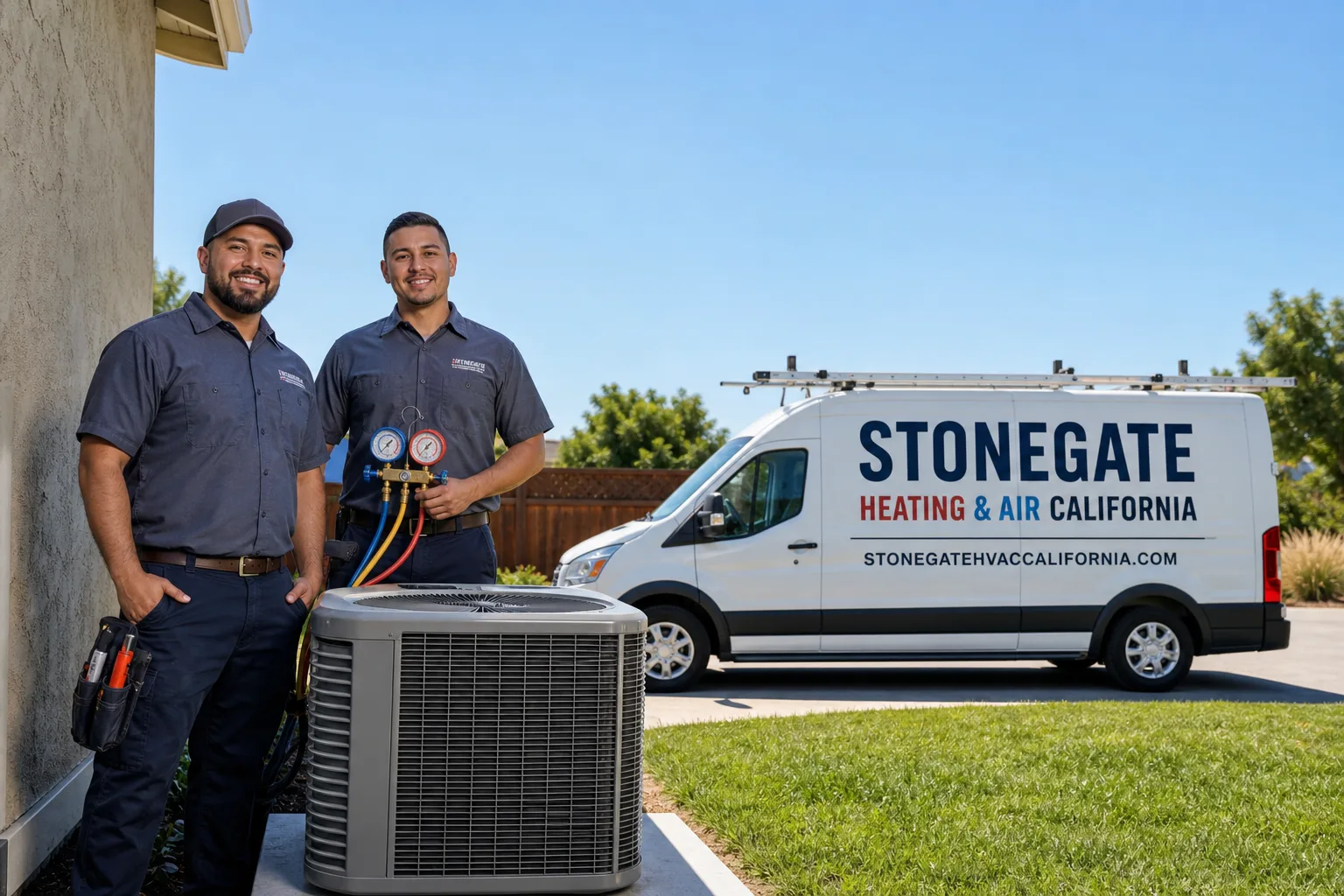
Fast, Reliable Heat Pump & Mini Split Across Chinatown
Heat pump and mini-split installation in San Francisco’s Chinatown runs $3,500–$7,500 for a full system, with most repairs falling between $150–$700 depending on whether we’re fixing a refrigerant leak or replacing a compressor. Our Heat Pump & Mini Split team serves the 94133 zip code and surrounding blocks with same-day response for emergency calls and scheduled installs throughout the week. We’ve worked the narrow streets around Grant Avenue and Waverly Place long enough to know that a standard suburban approach won’t cut it here. The buildings talk back. You need technicians who understand what they’re walking into. Call (855) 467-1888 for a free estimate.
Why Stonegate Heating & Air California Is Chinatown’s Preferred Heat Pump & Mini Split Company
We’ve spent 16 years building a reputation across California’s HVAC market, and nearly 500 verified reviews at a 4.7-star average tell the story better than we could. Owner Jason Trent doesn’t delegate from an office. He holds the title of Field Supervisor and shows up on job sites, including the tight-access rooftops and shared stairwells that define Chinatown’s 3–6 story walk-ups.
Our familiarity with this neighborhood runs deep. We know the parking logistics around Stockton Street, the DBI permit requirements for mixed-use buildings, and the reality that most structures here were rebuilt between 1907 and the 1920s with zero original ductwork. That matters when you’re recommending a ductless system versus trying to force conventional equipment where it doesn’t belong.
Response time to Chinatown typically runs same-day for emergencies and within 24–48 hours for scheduled installs. We’ve worked with enough property managers on Sacramento Street and residential owners above the restaurants on Jackson to understand the urgency when a heating system fails in fog-season damp.
Our Heat Pump & Mini Split Services in Chinatown
Mini Split Install
This is our most requested service in Chinatown, and for obvious reasons. The vast majority of buildings here were never designed for forced-air systems. Gravity floor furnaces, steam radiators, or wall heaters are the norm. A ductless mini split lets us deliver heating and cooling without tearing apart century-old framing that has zero clearance between units. We mount the wall cassette, run refrigerant lines through exterior walls or shared chases, and place the condenser on rooftops or rear fire escapes where space allows.
Last winter, our crew installed a Daikin multi-zone system in a 4-unit walk-up on Waverly Place, where years of improper wok exhaust routing had coated the existing wall heaters with grease. We sealed all line-set entries with fire-rated caulk and added a UV air scrubber to the hallway unit because the building chases were shared with the dim sum restaurant below. That’s the kind of context-aware work you get when your Field Supervisor has walked these job sites personally.

Multi-Zone System
Multi-zone mini splits are purpose-built for Chinatown’s building stock. One outdoor condenser can feed four or more indoor wall cassettes, each with independent temperature control. In a mixed-use building where the ground floor runs hot from kitchen equipment and the residential units above need steady heat, zoning isn’t a luxury. It’s the only way the system makes sense.
We size these carefully. The marine layer keeps summer highs in the low-to-mid 60s°F in this fog-sheltered pocket east of Nob Hill, so cooling load is minimal. Heating capacity and air quality management drive the design. Jason Trent reviews every multi-zone proposal personally to make sure we’re not oversizing equipment or undersizing the filtration.

Ductless System
The term covers single-zone and multi-zone mini splits, but in Chinatown it also means thinking about what the building isn’t: ducted. We’ve seen contractors try to retrofit flex duct through 18-inch wall cavities, crushing airflow and violating fire separation. Our ductless approach respects the building. We work with the masonry, not against it.
Century-old brick walls with zero vapor barriers are standard here. Moisture ingress behind poorly flashed wall units triggers mold and refrigerant line corrosion. We flash every penetration properly and use closed-cell insulation on line sets where they pass through exterior walls. It’s extra steps that matter in 94133.

Heat Pump Repair
When a heat pump fails in Chinatown, the call usually comes from someone who bought a system elsewhere and now can’t get the original installer to return. We’re certified on nine major brands, including Carrier, Bryant, and American Standard, so “we don’t service that brand” isn’t in our vocabulary. Common failures here include compressor issues from short-cycling in undersized spaces, and coil contamination from the grease-laden air that migrates through shared building chases.

Mini Split Repair
Grease-laden air from restaurant exhausts coats mini-split indoor coils, causing odors, reduced airflow, and condenser fan motor burnout within 12–18 months. Salt-laden marine fog combines with cooking humidity to corrode external condenser fins and line-set insulation on rooftops above 5–6 story buildings faster than inland installations. We see these patterns repeatedly. We clean coils with foaming degreaser, replace corroded hardware with coated alternatives, and recommend maintenance intervals that match the actual abuse the equipment takes.

What happens when you call
- 1
A real person answersNo phone trees — you reach a local pro.
- 2
You get an upfront price rangeHonest numbers before anyone is dispatched.
- 3
A background-checked tech heads outLicensed & insured, dispatched right away.
- 4
You approve before work beginsNothing starts until you say go.
Trusted Brands We Service in Chinatown
We carry factory training and hands-on experience across nine brands: Carrier, Trane, Lennox, Goodman, Rheem, York, Daikin, Bryant, and American Standard. For Chinatown specifically, we stock common Daikin and Bryant mini-split components locally because those systems handle the marine and grease environment well when properly maintained. Fast parts availability matters when you’re working in a building where a failed heating system affects multiple families and a restaurant’s operating permit could be at stake. We don’t make you wait for a warehouse shipment to the East Bay.
Common Heat Pump & Mini Split Problems We See in Chinatown Homes
- Grease-coated indoor coils from shared restaurant exhaust. In mixed-use buildings on Grant and Jackson, wok-range exhaust improperly routed through shared chases coats adjacent residential mini-split coils. The system works harder, smells like cooking oil, and eventually burns out the fan motor. We clean with commercial degreaser and seal line-set penetrations to isolate the unit.
- Salt corrosion on rooftop condensers. The marine layer that rolls over Nob Hill doesn’t spare Chinatown entirely. Condenser fins and line-set insulation on upper-story installations degrade faster than comparable equipment in Visitacion Valley or Noe Valley. We use coated hardware and recommend more frequent inspection intervals.
- Moisture ingress behind wall-mounted cassettes. Pre-1920s brick with no vapor barrier lets fog-driven moisture migrate behind improperly flashed units. We’ve pulled cassettes off walls to find mold on the backing plate and corrosion on the refrigerant flare nut. Proper flashing and closed-cell insulation prevents it.
- Short-cycling from oversized single-zone units. A common mistake in small SRO hotel rooms and studio apartments: installing too much capacity because the contractor sized for cooling load that Chinatown doesn’t actually have. The system never runs long enough to dehumidify or distribute heat evenly. We size for heating dominance and minimal cooling need.
Pricing for Heat Pump & Mini Split in Chinatown, CA
Here’s what we see in the current Chinatown market. These ranges reflect the complexity of working in century-old mixed-use buildings with tight access and shared infrastructure.
| Service | Typical Range in Chinatown |
|---|---|
| Mini Split Repair | $150–$650 |
| Heat Pump Repair | $150–$700 |
| AC Installation / Heat Pump Install | $3,500–$7,500 |
| Tune-Up | $80–$200 |
What moves the needle toward the high end: multi-zone systems with more than three cassettes, rooftop condenser placement requiring crane or hoist access, fire-rated sealing work in mixed-use buildings, and IAQ add-ons like UV scrubbers or enhanced filtration for units above restaurants. What keeps costs down: straightforward single-zone wall cassette installs on ground or second floor with rear exterior wall access.
Every estimate we provide is free and itemized. Jason Trent reviews the scope personally before we quote. Call (855) 467-1888 to schedule.
We Also Serve Cities Near Chinatown
Our service radius extends naturally from the 94133 core into surrounding San Francisco neighborhoods. We handle Heat Pump & Mini Split calls in the Mission District, where Victorian conversions present their own ductless challenges; Noe Valley, with its hillside access and fog exposure variations; and Visitacion Valley, where post-war housing stock differs sharply from Chinatown’s earthquake-era rebuilds. Same team, same Field Supervisor oversight, same multi-brand capability across every zip code.
Serving Chinatown, CA — Our Local Coverage Area
We’re based in the Chinatown area and know this community well. Use the map below to see our service coverage — if you’re nearby, we can almost certainly help.
FAQs — Heat Pump & Mini Split in Chinatown
Yes, expect 20–30% faster corrosion on external components compared to inland San Francisco neighborhoods. The condenser fins go first, followed by line-set insulation cracking and hardware rust on mounting brackets. We use coated fasteners and recommend annual inspection of the outdoor unit if you’re within three blocks of the bay. Call (855) 467-1888 to add a corrosion-check to your next tune-up.
We assess every shared chase and common wall during our site survey, and we coordinate with property management when exhaust routing affects our line-set path. Chinatown’s dense mixed-use buildings, where restaurant kitchen grease migrates through shared chases into residential spaces, means any mini-split install must include IAQ checks and isolating wall units from contaminant pathways. We don’t just mount the unit and leave. Call (855) 467-1888 and we’ll walk the building with you.
Absolutely. It’s actually the ideal application. Mini splits are ductless by design, and we’ve installed hundreds in buildings with gravity furnaces, steam radiators, or no prior mechanical heating at all. The challenge is routing lines through 16-inch masonry walls with zero clearance, not the system itself. We solve that with careful core drilling and proper flashing. Call (855) 467-1888 for a free feasibility assessment.
Every six months, not annually. The grease load in shared mixed-use buildings is severe enough that coil contamination becomes a performance issue within a single season. Our $80–$200 tune-up includes coil cleaning, refrigerant check, drain line clearing, and hardware inspection. For units above active kitchens, we recommend the six-month interval without exception. Call (855) 467-1888 to set up a recurring schedule.
Daikin and Bryant multi-zone systems have performed well for our Chinatown customers when paired with proper installation sealing and adequate filtration. The equipment itself matters less than the protective measures: fire-rated caulk on all penetrations, elevated condenser placement where possible, and MERV-11 or better filtration on hallway units. Jason Trent specifies these details on every mixed-use proposal. Call (855) 467-1888 to discuss brand options for your building.
Written by Jason Trent, Owner and Field Supervisor at Stonegate Heating & Air California, serving Chinatown and the greater Sacramento region since 2008.